What years of building autonomy taught us about bridging the research-to-market gap
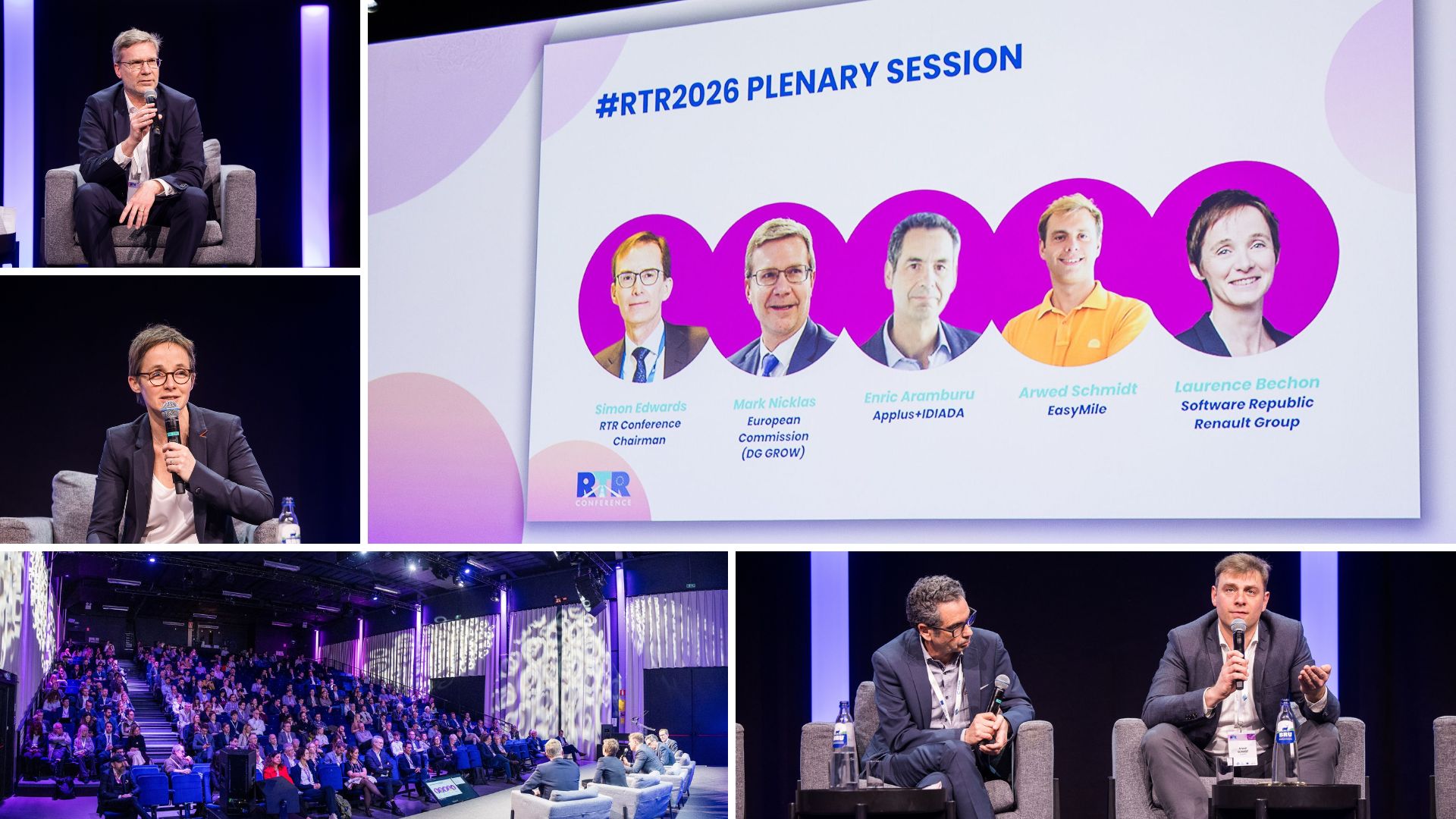
At a recent panel discussion in Brussels on moving research results into the European market, Arwed Schmidt, EasyMile's Director of Strategic Initiatives and Managing Director for Germany, made a statement that reframed the entire conversation:
"Governments are not our clients."
It is the kind of sentence that can sound dismissive out of context. It is not. After more than a decade of building autonomous driving technology in Europe, it is one of the most useful things we have learned, and it explains why EasyMile looks very different today than it did 10 years ago.
From dreams to reality
When EasyMile was founded in 2014, the autonomous vehicle landscape was full of optimism. Money was available, investors were patient, and the assumption was that autonomy could be deployed almost anywhere a vehicle moves. EasyMile, like many companies of that era, tried to be a turnkey provider: hardware, software, integration, deployment, after-sales. Everything.
That model does not work, and the reasons are unglamorous. Depreciation cycles for perception software, safety software, and vehicle platforms do not align. A company trying to manage all of them at once is constantly paying for the wrong thing at the wrong time. Add a portfolio of vehicle types, use cases, and geographies, and the operational burden becomes impossible for a company at European scale. Schmidt described one early example: a deployment engineer flying from Singapore to Western Australia overnight to remove a single screw, at a cost roughly equal to his monthly salary. Each individual decision made sense inside the project. Together they made the company unprofitable.
The lesson was not that autonomy doesn't work. It was that the business model around it had been wrong.
EasyMile 2.0
The company's response was a structural change. EasyMile is now a software licensor. We provide the autonomous driving software stack to partners who own the vehicle platform, the depreciation, the customer relationship, and the after-sales work. They address the market vehicle-side. We address the complexity software-side.
This sounds simple. It is not. The complexity of autonomous driving software, particularly the safety-critical layers, is exactly where small European companies can compete on technical depth. What we cannot compete on is running a global fleet operation with a few hundred people. Separating those two functions lets each side specialize, and lets each side find a sustainable economic model.
Why airports?
Choosing where to deploy is as important as the technology itself. EasyMile's focus on airport ground operations, through partners like TractEasy, is a deliberate market choice. Airports are globally consistent. The signage is similar, the vehicle types are similar, the aircraft are similar, the operating procedures are similar. For an autonomous system built on pattern recognition and annotated environments, that consistency is everything. It means software developed for one airport can be deployed at another without rebuilding the perception stack from scratch.
This is what Schmidt called the easier market. Not easy. Easier. It is a market where the unit economics of autonomy can actually close, because the same software earns its keep across many deployments instead of being rebuilt for each one.
The contrast he drew was with public passenger transport. Autonomous shuttles have been piloted across Europe for years, including by EasyMile. The technology works. The business case does not, because public transport authorities cannot currently absorb the capex and opex of autonomy at the prices the technology requires. Someone has to bring those costs down first, in a market that can sustain them, before the public transport application becomes viable. Pretending otherwise produces an endless loop of pilots that never become businesses.
Regulation: enabling or pausing the market?
The other lesson from twelve years of work concerns regulation, and it is more nuanced than the usual complaints.
Germany introduced a framework requiring certified steering and braking chains for autonomous vehicles on public roads. From a safety-engineering perspective, the requirement is rigorous and defensible. From a market perspective, it has set a quality gate so high that very few companies can clear it, even with public funding designed to help them try. The result is a market that has been effectively paused while it waits for the rest of the supply chain to catch up.
Schmidt's point is not that the regulation is wrong. It is that policy makers and industry need to ask, more honestly than they currently do, whether a given framework is enabling a market or starving it. Both outcomes are possible from rules that look reasonable on paper. The next decade of European AV policy will be defined by how clearly that question gets asked.
A framework for the next decade
Asked what he would recommend to other innovators trying to bridge the research-to-market gap, Schmidt offered six points that read as a working playbook for European autonomy:
- Look realistically at today's AV market. The hype cycle is over. The companies that survive will be the ones that priced their plans against actual demand.
- Only run projects when the operational design domain is mature enough. Too many pilots have been launched into environments the technology was not ready for, and the pilots themselves became the deliverable.
- Ask, mid-project, whether continuing makes sense. European funding structures rarely reward stopping early, even when stopping is the right answer.
- Build a quality-gating mechanism at European level. Funded projects should pitch their results to an independent investment board, with no involvement in the project's history, partway through. Financial scrutiny tells you faster than anything else whether a path is viable.
- Bring costs down to the technology elements that matter. Calls that distribute budgets across too many parallel objectives produce diluted technology and no commercial outcome.
- Bring the competent people together. After twelve years, Europe has a deep bench of engineers, founders, and operators who have learned what does and does not work. The work now is connecting them, not training a new generation from scratch.
The honest version of the gap
The research-to-market gap in European autonomy is not, primarily, a funding gap. It is a clarity gap. Companies need to be honest about which markets can sustain the technology today, which cannot, and what has to change for the second category to become the first. Funders need to be honest about whether their instruments accelerate that clarity or delay it. Policy makers need to be honest about whether their rules enable a market or wall it off.
None of this is comfortable. It is, after twelve years, the conversation the industry actually needs to have.
Watch the full panel discussion here


